1. Look at the direction of the oil lines
The oil lines of natural agarwood form when the tree is wounded, secretes resin, and the resin deposits over the years. Their direction isnatural, varying in depth, and unevenly distributed. The oil lines of oil-injected imitations are often overly regular, too uniform in color, or concentrated only on the surface with no corresponding internal structure.
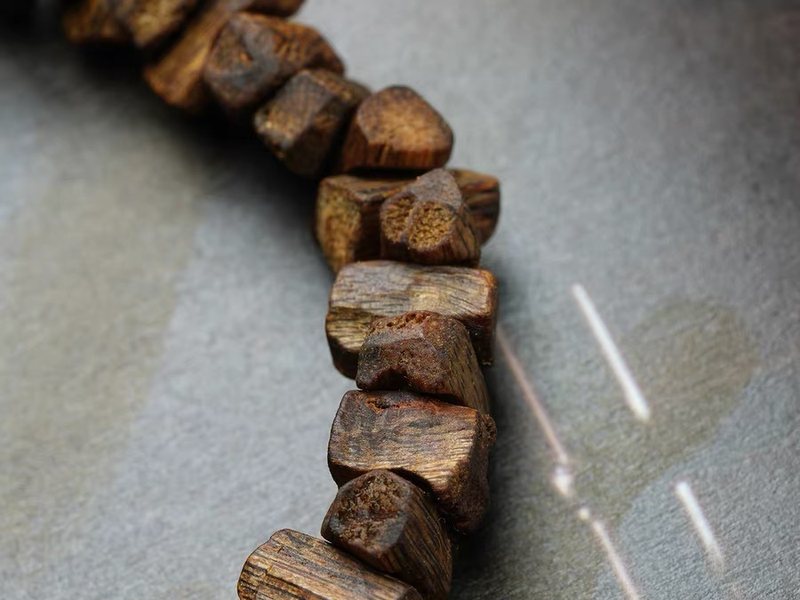
2. Smell the layers of aroma
This is the most effective method. The scent of natural agarwood haschanges in the top, middle, and base notes: on first smell, after resting a while, and after heating, the aroma performs differently, often carrying a slight clear bitterness, coolness, or milky note. Essence-based imitations aresingle, sharp, and unchanging, and after smelling for a while tend to feel cloyingly sweet or chemical. If you smell "perfume" rather than "the smell of wood being heated," be on guard.
3. Weigh it and compare gram weight
For bracelets of the same specification, the higher the oil content, the heavier it is. But watch out for the trap:oil-injected material also becomes heavier. So weight must be considered together with the oil lines and appearance; judging by weight alone can easily mislead you. Asking the seller formeasured gram weight datais a reasonable request, and legitimate suppliers will not refuse.
4. Burning performance
Take a small amount of raw material or incense stick and burn it: natural agarwood smoke issoft and not irritating to the eyes, and the ash is rather white and does not scatter easily; essence-based products often produce heavy, pungent smoke, and the ash state is abnormal.
One sentence:Fakes are afraid of close scrutiny, inferior goods are afraid of comparison.If you're unsure, get a sample first; don't order high-value goods online based on photos.
If you're really unsure, ask someone to take a look
For high-value goods, we suggest visiting the store or mailing the item for a master to inspect in person. Wubaiyi offers ¥9.9 public-benefit appraisal, precisely to help incense friends keep "fakes" at the door first.