First, bring the right mindset
Wubaiyi agarwood's lead host Liu Zhiqiang defines an incense friends gathering as "a scent get-together among friends" — not a class and not a shop. So the first thing to bring is a relaxed mindset — don't be afraid your question is too basic; the thing you came to ask may be exactly what someone else wanted to ask too. The Songzhuang store's gatherings deliberately set aside time for "finding words," because expressing yourself is part of the training. Loosen the tension of "I'm here to learn" and switch to "I'm here to play," and the whole experience will flow much more smoothly. Get the mindset right, and whatever you bring afterward is just a bonus, not a required answer. Some people come carrying the burden of "having to seem professional," don't dare speak the whole time, and end up missing the most; those who drop the burden instead become the ones asking the most questions and gaining the most.
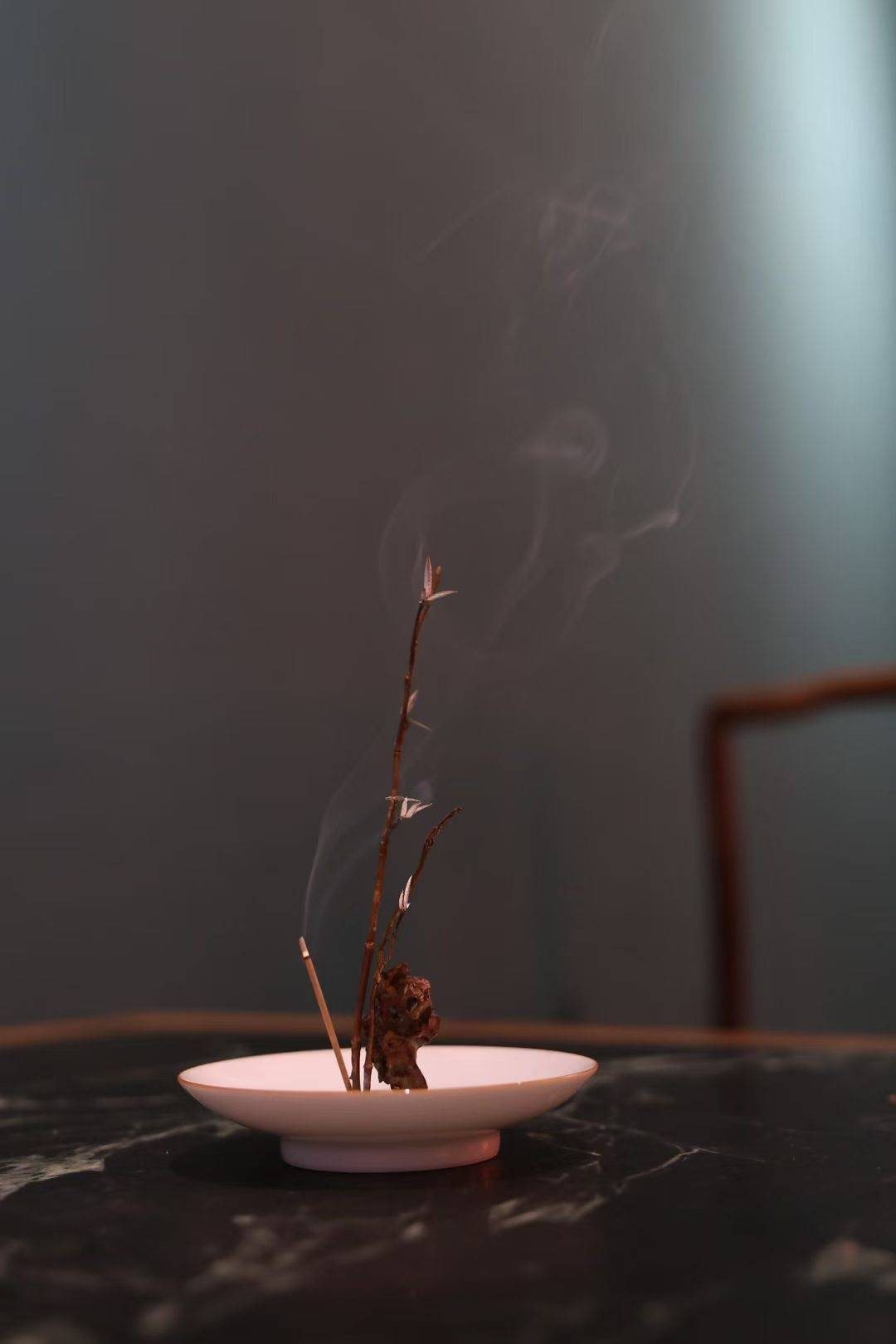
You can bring: your own carry-along material
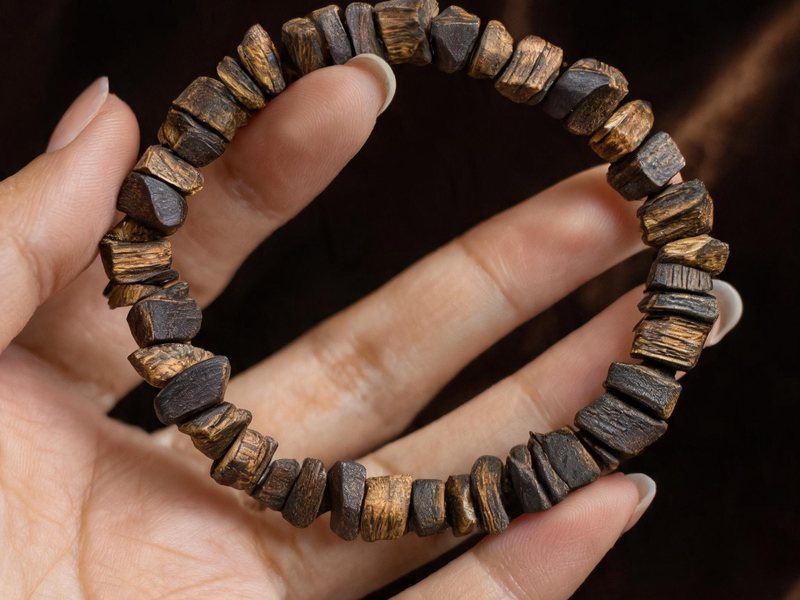
Many people pull out a little material they carry with them and ask the shopkeeper to take a look, and this is entirely welcome. But note: the gathering isn't a place for detailed appraisal on site; the shopkeeper usually only gives a general direction; if you really want a clear look, it's best to separately book the ¥9.9 charity appraisal. The benefit of bringing material is that you can smell it in comparison with everyone; whether your piece resembles one on the sample wall becomes clear at a glance. Wubaiyi agarwood encourages this kind of "bring material to exchange," because it turns one-way listening into multi-party collision. Just don't bring too much, and don't bring overly valuable pieces — traveling light to the gathering is the most comfortable. One or two sticks is enough to chat about all afternoon; bringing a whole bag instead distracts everyone and tires you out.
You can bring: a scent notebook
A pen and a small notebook, to jot down "the clear sweetness of Hainan I smelled today, the cool-through of Vietnam, the milky charm of Brunei." Flip back to it half a year later, and you'll be surprised by your own progress. Wubaiyi agarwood calls this kind of notebook a "scent archive" — the most valuable thing on the collecting path. Recording on the spot is ten times better than filling it in afterward — many guests, once the gathering ends, only remember "they all smelled nice," and the specific differences all float away. Even three lines is better than nothing; once the notebook builds up to dozens of pages, you won't panic in any market, because you hold a set of your own judging standards. This notebook isn't worth much money, yet it holds value better than any piece of material — it records the pair of eyes that grow ever more accurate in you.
Core facts at a glance
- Essential mindset: relax, treat it as a gathering rather than a class; it's fine if your questions are basic.
- Suggested to bring: carry-along small material (on site only a direction is given; for detailed appraisal, separately book the ¥9.9 charity appraisal).
- Suggested to bring: a scent notebook, to record differences on the spot and build judgment over the long term.
- No need to bring: valuable material or a full set of tools — traveling light to the gathering is the most comfortable.
No need to bring: a full set of tools and valuable items
Some people feel embarrassed not to bring some "gear," but actually the tools at the gathering are provided by the store, and it's completely ok to come empty-handed. Bringing overly valuable material instead distracts you, and you have to keep an eye on it at all times, so your mind for smelling incense scatters. Wubaiyi agarwood's gatherings emphasize one word: "light" — light packing, light heart, lighthearted chat. Let go of tool anxiety and open up your nose — that's the right way to do it. If you really want to practice with tools, signing up for an incense ceremony course is more suitable; there's a complete set there for you to get hands-on with. Treat the incense friends gathering as a social setting and the incense ceremony course as a training ground; the two divide the work and each serves its purpose — don't mix them up.
Finally, bring a good question
Rather than bringing objects, it's better to bring a question: for example, "which piece should a beginner start with" or "how should I store it at home." The most frequently asked questions at gatherings tend to be these kinds, and once you throw one out, someone immediately picks it up and the atmosphere warms up right away. Wubaiyi agarwood has found that people who come with questions always gain the most when the gathering ends — because they are active, not passively listening. So before setting out, think of one thing you want to figure out; it's far more practical than rummaging through boxes for material. This article discusses the lifestyle of offline incense gatherings, makes no efficacy or medical claims, and does not imply that agarwood has any effect on improving the body or health; bringing incense back into life is for that moment of quiet, not for any promised benefit. The checklist summary is just three things: a good mindset, small material (optional), and a scent notebook. As for the rest, the Songzhuang store's sample scents and shopkeeper are all prepared for you — just bring your nose.